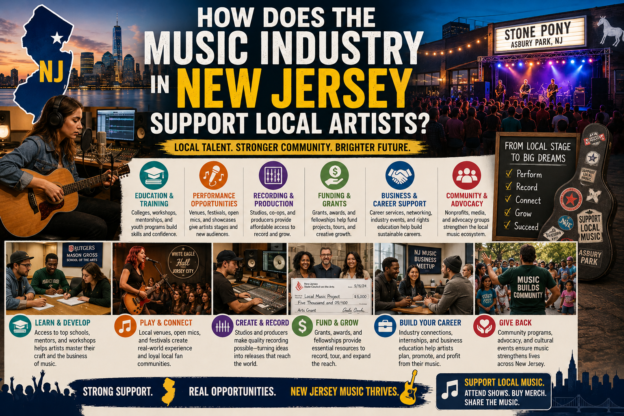
New Jersey’s music scene is more than Bruce Springsteen and iconic venues — it’s a living ecosystem that helps artists develop, perform, record, and connect with audiences. From community-focused venues and festivals to grant programs, incubators, and college music departments, the state provides a mix of resources that help artists build careers, earn income, and find audiences both regionally and beyond. This post breaks down the practical ways New Jersey’s music industry supports local artists and how musicians can tap those pathways.
Nurturing talent: education, mentorship, and training
Formal education and college programs
- Colleges and conservatories offer music degrees and industry courses. Institutions like Rutgers University, Montclair State, and William Paterson University provide performance training, music technology, composition, and business classes that teach artists how to make music and manage careers.
- Community college programs and adult education classes make technical skills—recording, mixing, live sound—accessible for artists who can’t commit to full degrees.
Workshops, mentorships, and artist labs
- Organizations and studios run short workshops on songwriting, promotion, and royalty collection. These often pair up-and-coming musicians with experienced professionals.
- Mentorship programs connect local artists with producers, managers, and experienced performers who give practical career guidance—helping artists avoid common mistakes and make strategic decisions.
Youth and school-based programs
- After-school and youth music initiatives (school music programs, community centers) build early skills and foster local audiences. Programs that offer instrument lessons, ensemble experience, or stage opportunities are crucial for future talent pipelines.
Performance platforms: venues, festivals, and open mics
Independent venues and clubs
- Small clubs and independent venues across Jersey City, Hoboken, Asbury Park, Princeton, and Newark provide regular gig opportunities. These intimate stages let artists perform frequently, experiment with sets, and build a local following.
- Many venues offer pay-to-play or split-door deals that give new artists a share of ticket sales, plus bar tips — practical income sources while building exposure.
Festivals and community stages
- Annual festivals (regional music festivals, town fairs, cultural celebrations) program local acts alongside headliners. Playing festivals exposes artists to larger, mixed audiences and press attention.
- Seasonal boardwalk shows and outdoor concert series create high-traffic performance opportunities in tourist and community spots.
Open mics, showcases, and artist nights
- Weekly open-mic nights and curated showcases are entry points for discovery. Promoters and venue bookers scout talent at these events; artists can meet other performers, producers, and listeners in an informal setting.
Recording and production: studios, co-ops, and DIY resources
Independent recording studios
- New Jersey hosts many small studios offering session time at rates lower than major-city facilities. These studios supply engineering knowledge, affordable production, and a local network of session musicians.
- Producers who work locally often champion nearby artists, creating stylistic scenes and collaborative projects.
DIY recording spaces and co-ops
- Creative co-ops and shared rehearsal studios give artists affordable practice and recording space. Co-ops sometimes offer equipment rental, engineering help, and community knowledge—critical for artists on tight budgets.
Local labels and distributors
- Boutique labels and independent distributors help regional artists press vinyl, produce EPs, and place songs on streaming services. Local labels often provide artist development support and regional promotion that national companies might overlook.
Funding and financial support: grants, prizes, and incentives
State and municipal grants
- New Jersey arts councils and local cultural affairs offices provide grants and project funding to musicians and ensembles. These grants can support recordings, tours, community outreach, and music education projects.
- Municipal arts funds and public arts programs sometimes commission performances or sponsor festivals, directly paying artists for work that benefits local communities.
Nonprofit grants and foundations
- Regional foundations and arts nonprofits award project-based funding, residency stipends, and small operating grants. These sources often favor community engagement, educational outreach, or culturally focused projects—areas where local artists can shine.
Contests, awards, and fellowships
- Competitions and artist awards provide prize money, studio time, and promotional exposure. Winning a regional contest can jumpstart press coverage and bookings.
Business support: networking, promotion, and rights education
Artist incubators and accelerator programs
- Incubator programs combine business coaching, marketing help, and networking to get artists to the next level. These programs teach budgeting, touring logistics, and building a team.
- Accelerators often culminate with public showcases where industry professionals attend, giving artists direct exposure to managers, venues, and media.
Industry networking events and conferences
- Meetups, panels, and regional music conferences link musicians with promoters, booking agents, and sync reps. Networking events reduce the isolation of independent music work and create collaboration pathways.
Music business education and rights workshops
- Workshops covering publishing, performance rights, licensing, and royalty collection help artists keep revenue they’re owed. Organizations and attorneys sometimes offer pro bono or low-cost sessions explaining how to register songs, collect royalties through PROs, and negotiate contracts.
Media, press, and playlist placement
Local radio stations and college radio
- New Jersey’s community and college radio stations play local artists, provide interview slots, and add tracks to rotation—boosting exposure to listeners who trust local tastemakers.
- Specialty shows spotlight emerging genres and scenes, which can lead to ticket sales and local press coverage.
Local press, blogs, and podcasts
- Regional music blogs, arts sections in local newspapers, and podcasts frequently profile local artists and review shows. A favorable local write-up often helps bookings and builds credibility with promoters.
Playlist curators and streaming promotion
- Local curators (independent playlist makers, venue playlists) can help songs reach streaming listeners. Some regional promoters maintain playlists that feature New Jersey artists and help attract out-of-state listeners.
Live support: booking, touring, and artist-friendly infrastructure
Booking networks and promoters
- Local promoters book statewide circuits of venues so artists can plan short tours across cities and towns. These networks help artists scale from single gigs to multi-stop regional runs.
- Booking collectives and promoters sometimes bundle shows into tours, offer guarantee payments, and handle logistics so artists can focus on performance.
Tour routing and house-show circuits
- A house-show community and friendly DIY circuit make it easy for artists to test new material and strengthen grassroots followings. House shows can be profitable and create strong local fan loyalty.
Merchandising and side income
- Local markets and events provide opportunities for on-site merch sales and pop-up booths. Dedicated areas at festivals for artisan sellers help artists create direct income streams beyond ticket revenue.
Community and cultural support: nonprofit venues, advocacy and cultural programming
Nonprofit arts organizations
- Nonprofit music venues and performance spaces emphasize mission-driven programming, educational outreach, and access. These organizations often book riskier, artist-centered shows and provide residency programs.
Cultural programs and community engagement
- City and county cultural events showcase local talent for free or low-cost civic events, parades, and public art programming. Community engagement increases visibility and creates fans outside typical music circles.
Advocacy groups and artist unions
- Advocacy groups push for artist-friendly policies such as fair payment, venue safety, and public funding for the arts. Collective action helps secure long-term supports like grant programs and performance spaces.
How these supports translate into artist livelihoods
Building an audience
- Frequent local shows, media features, and festival slots help artists grow a loyal local fanbase that buys tickets and merch. A strong regional base often becomes the core that sustains touring and streaming growth.
Professional development and sustainability
- Training, mentorship, and business workshops equip artists to manage careers, budget effectively, and diversify income (gigs, teaching, sync licensing). Education reduces reliance on one income source and increases career longevity.
Collaborations and creative growth
- Local scenes promote collaborations—bands form, producers mix, and artists guest on each other’s recordings. This cross-pollination fuels creative growth and raises the profile of an entire scene.
Practical steps for artists to tap New Jersey’s support
- Register with local resources
- Join local arts organizations, mailing lists from venues and festivals, and community music groups to stay aware of opportunities.
- Play regularly and diversify venues
- Book clubs, cafes, festivals, and house shows. Different settings build a wider local audience and increase booking chances.
- Apply for grants and residencies
- Track deadlines for state and municipal arts grants and tailor applications to community impact and education components.
- Learn the business basics
- Attend workshops on royalties, contracts, and digital distribution. Register songs with a PRO and set up accounts on streaming distribution platforms.
- Build a local press kit and network
- Keep an up-to-date EPK: bio, photos, sample tracks, and live video. Network at showcases and use college radio and local blogs for exposure.
- Collaborate and cross-promote
- Work with local producers, photographers, and other musicians for co-billing shows and shared promotion, which multiplies reach.
- Use affordable production options
- Record at indie studios or co-op spaces, release EPs, and use targeted local ads to promote shows.
Example pathway: from open mic to regional touring
- Start at open mic nights to refine performance and meet a local promoter. Get booked at a small venue, then a festival. Apply for a small grant to fund recording an EP at an affordable studio. Use the EP to pitch college radio and local playlists, then book a three-date regional run coordinated by a local promoter. Each step builds credibility, audience, and income.
Barriers and ongoing needs
- Funding gaps: Not all artists secure grant money; many rely on unstable gig income. More consistent funding and living-wage supports would help.
- Venue instability: Rising rents and changing neighborhoods can close key mid-size venues that are stepping stones for artists.
- Visibility challenges: Breaking beyond local borders needs coordinated promotion and access to national networks, which remain limited for many.
- Equity and access: Ensuring resources reach underrepresented communities and artists outside major towns is an ongoing challenge.
Supporting New Jersey Music Industry
New Jersey’s music industry supports local artists through a layered system of education, performance opportunities, recording resources, financial aid, business support, media exposure, and community programs. For artists, the practical path to success combines regular performance, business learning, local networking, and creative collaboration. Where state and local organizations invest in accessible venues, funding, and mentorship, artists find concrete ways to grow careers and contribute culturally and economically to their communities.