Author Archives: Guy Payne

Technology Affecting the Music Industry

How Has Technology Affected the Music Industry in New Jersey?

Technology has completely transformed the music industry in New Jersey, making it easier than ever for artists to create, share, and promote their music. From home studios in Jersey City to live venues in Hazlet, digital tools and streaming platforms have opened new doors while also creating fresh challenges for musicians across the Garden State.


The Rise of Home Studios and Digital Production

One of the biggest changes technology has brought to New Jersey’s music scene is the ability for artists to record professional-quality music without needing expensive studio time. In the past, musicians had to book time at costly recording studios and work within tight schedules. Today, digital audio workstations (DAWs) like Pro Tools, Logic Pro, and Ableton Live allow artists to produce, mix, and master tracks right from their bedrooms or home setups.

This shift has been especially powerful for independent artists in New Jersey who may not have the budget for traditional studio sessions. Studios like Baceface Studios in Jersey City and Studio Z in Hazlet now offer flexible, affordable options that combine both analog and digital equipment, giving musicians the best of both worlds. These spaces support all major DAWs and can adapt to any workflow, making professional production accessible to a wider range of creators.

Technology has also changed what it means to be a music producer. Tasks that once required a full team—engineers, session musicians, and expensive gear—can now be handled by one person with a laptop. Drum machines, synthesizers, and virtual instruments have replaced the need for large bands in many cases, allowing solo artists to create full, layered tracks on their own. This democratization of music production has led to a surge in independent releases from New Jersey artists who can now compete on a global stage without major label backing.


Streaming Platforms and New Ways to Reach Fans

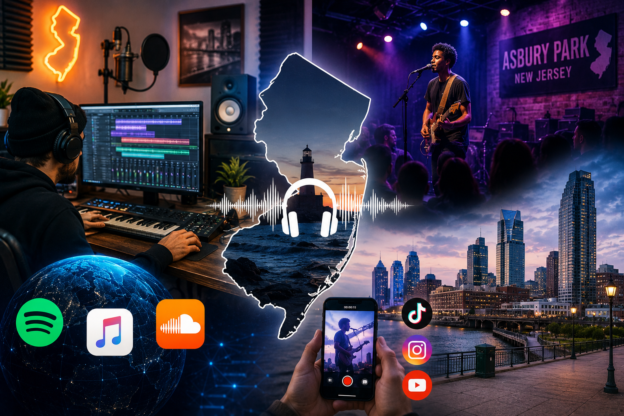
Streaming services like Spotify, Apple Music, and SoundCloud have revolutionized how people in New Jersey—and around the world—discover and listen to music. Instead of buying physical CDs or downloads, listeners now access vast libraries of songs through subscription services or free, ad-supported platforms. This shift has had a huge impact on how New Jersey artists build their careers.

On the positive side, streaming has removed many of the old barriers to entry. Artists no longer need international distribution deals or radio play to reach listeners in different countries. A song uploaded from a home studio in Newark can be heard instantly by someone in Tokyo or London. This global accessibility has allowed New Jersey musicians to find niche audiences and build fanbases far beyond their local scene.

However, streaming has also created new financial challenges. While it’s easier than ever to get music out there, the payouts per stream are notoriously low. As of 2026, Spotify pays artists approximately $0.004 per stream, meaning an artist would need 250,000 streams just to earn $1,000. For many independent musicians in New Jersey, streaming serves more as a visibility and discovery tool than a reliable source of income. To make a living, artists often need to combine streaming revenue with live performances, merchandise sales, licensing deals, and other income streams.

Streaming has also changed the way music is created. With algorithms and playlists driving discovery, many artists now focus on producing shorter, more frequent releases to stay visible throughout the year. This “constant content” model encourages regular creative output and direct engagement with fans, but it can also put pressure on musicians to prioritize quantity over quality.


Social Media and Direct Fan Engagement

Social media platforms like Instagram, TikTok, YouTube, and Facebook have become essential tools for New Jersey musicians looking to build their brands and connect with audiences. In the past, artists relied heavily on radio stations, music videos on MTV, and traditional marketing campaigns to get noticed. Today, a viral TikTok video or an Instagram Reel can launch a song into the spotlight overnight.

This shift has given artists more control over their own promotion. Instead of waiting for a record label to push their music, musicians can post behind-the-scenes content, share snippets of new tracks, and interact directly with fans in real time. For New Jersey artists, this means they can build a loyal following without needing to leave their home state or invest in expensive advertising.

Social media has also changed the skills required to succeed in the music industry. Being a great musician is no longer enough; artists now need to be content creators, marketers, and community managers as well. Many New Jersey musicians have embraced this reality, using platforms like TikTok to showcase their personalities, share their creative process, and even collaborate with other artists remotely.

The rise of social media has also made it easier for artists to find their niche. Whether it’s indie rock, hip-hop, electronic, or folk, musicians can connect with fans who share their specific tastes, no matter how the genre might be. This has led to a more diverse and vibrant music scene in New Jersey, with artists from all backgrounds finding their place in the digital landscape.


Live Music and Technology in New Jersey Venues

While digital tools have transformed how music is created and consumed, live performances remain a vital part of New Jersey’s music culture. Technology has also made its mark on the live music scene, with venues and artists using digital tools to enhance the concert experience.

Venues like Studio Z in Hazlet now operate as both recording studios and live music spaces, offering artists the chance to record, rehearse, and perform all in one location. These hybrid spaces use advanced sound systems, lighting rigs, and streaming capabilities to create immersive experiences for both in-person and online audiences.

Technology has also improved the quality of live sound. Modern digital mixing consoles allow sound engineers to fine-tune every aspect of a performance, from balancing instruments to adjusting acoustics in real time. This means that whether you’re seeing a show at a small club in Jersey City or a larger venue in Asbury Park, the audio quality is more consistent and professional than ever before.

Some New Jersey venues have even started livestreaming concerts, allowing fans who can’t attend in person to watch from home. This hybrid model has become especially important in recent years, as it opens up new revenue streams for artists and venues while expanding their reach to global audiences.


Challenges and Opportunities for New Jersey Musicians

Despite all the benefits, technology has also introduced new challenges for musicians in New Jersey. The ease of access to production tools and distribution platforms means there’s more competition than ever. With millions of songs uploaded to streaming services every year, standing out from the crowd requires not just talent, but also smart marketing and consistent engagement.

Another challenge is the financial sustainability of a music career in the streaming era. While technology has made it easier to release music, it has also made it harder to earn a living wage from recordings alone. Many New Jersey artists now rely on a combination of streaming income, live performances, teaching, session work, and sync licensing to make ends meet.

On the flip side, technology has created unprecedented opportunities for collaboration and innovation. Cloud-based platforms allow artists to work together in real time, even if they’re in different cities or countries. AI tools are helping musicians with everything from songwriting to mixing, lowering the barrier to entry for newcomers. And educational programs like the Mobile Music Lab’s Beatcraft initiative are bringing professional-grade equipment and training to underserved communities, ensuring that the next generation of New Jersey musicians has the tools they need to succeed.


Reshaping The Music Industry

Technology has fundamentally reshaped the music industry in New Jersey, offering both exciting opportunities and new challenges. From home studios and streaming platforms to social media and live venue innovations, digital tools have made it easier than ever for artists to create, share, and promote their music.

While the financial landscape remains tough for many independent musicians, the ability to reach global audiences and build direct connections with fans has never been stronger. For New Jersey artists willing to adapt and embrace these changes, the future of music is full of possibilities.
Support local music in New Jersey

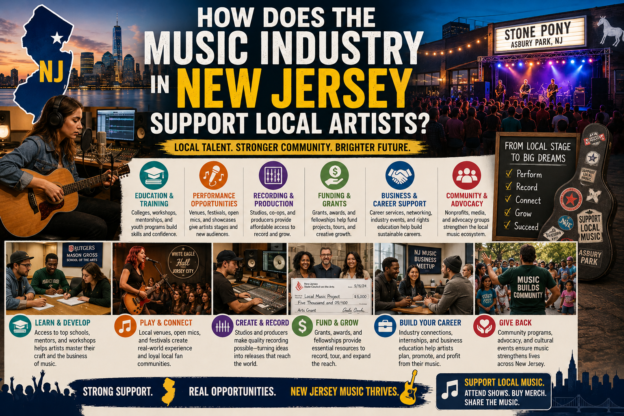
How Does The Music Industry in New Jersey Support Local Artists?

New Jersey’s music scene is more than Bruce Springsteen and iconic venues — it’s a living ecosystem that helps artists develop, perform, record, and connect with audiences. From community-focused venues and festivals to grant programs, incubators, and college music departments, the state provides a mix of resources that help artists build careers, earn income, and find audiences both regionally and beyond. This post breaks down the practical ways New Jersey’s music industry supports local artists and how musicians can tap those pathways.

Nurturing talent: education, mentorship, and training

Formal education and college programs

  • Colleges and conservatories offer music degrees and industry courses. Institutions like Rutgers University, Montclair State, and William Paterson University provide performance training, music technology, composition, and business classes that teach artists how to make music and manage careers.
  • Community college programs and adult education classes make technical skills—recording, mixing, live sound—accessible for artists who can’t commit to full degrees.

Workshops, mentorships, and artist labs

  • Organizations and studios run short workshops on songwriting, promotion, and royalty collection. These often pair up-and-coming musicians with experienced professionals.
  • Mentorship programs connect local artists with producers, managers, and experienced performers who give practical career guidance—helping artists avoid common mistakes and make strategic decisions.

Youth and school-based programs

  • After-school and youth music initiatives (school music programs, community centers) build early skills and foster local audiences. Programs that offer instrument lessons, ensemble experience, or stage opportunities are crucial for future talent pipelines.

Performance platforms: venues, festivals, and open mics

Independent venues and clubs

  • Small clubs and independent venues across Jersey City, Hoboken, Asbury Park, Princeton, and Newark provide regular gig opportunities. These intimate stages let artists perform frequently, experiment with sets, and build a local following.
  • Many venues offer pay-to-play or split-door deals that give new artists a share of ticket sales, plus bar tips — practical income sources while building exposure.

Festivals and community stages

  • Annual festivals (regional music festivals, town fairs, cultural celebrations) program local acts alongside headliners. Playing festivals exposes artists to larger, mixed audiences and press attention.
  • Seasonal boardwalk shows and outdoor concert series create high-traffic performance opportunities in tourist and community spots.

Open mics, showcases, and artist nights

  • Weekly open-mic nights and curated showcases are entry points for discovery. Promoters and venue bookers scout talent at these events; artists can meet other performers, producers, and listeners in an informal setting.

Recording and production: studios, co-ops, and DIY resources

Independent recording studios

  • New Jersey hosts many small studios offering session time at rates lower than major-city facilities. These studios supply engineering knowledge, affordable production, and a local network of session musicians.
  • Producers who work locally often champion nearby artists, creating stylistic scenes and collaborative projects.

DIY recording spaces and co-ops

  • Creative co-ops and shared rehearsal studios give artists affordable practice and recording space. Co-ops sometimes offer equipment rental, engineering help, and community knowledge—critical for artists on tight budgets.

Local labels and distributors

  • Boutique labels and independent distributors help regional artists press vinyl, produce EPs, and place songs on streaming services. Local labels often provide artist development support and regional promotion that national companies might overlook.

Funding and financial support: grants, prizes, and incentives

State and municipal grants

  • New Jersey arts councils and local cultural affairs offices provide grants and project funding to musicians and ensembles. These grants can support recordings, tours, community outreach, and music education projects.
  • Municipal arts funds and public arts programs sometimes commission performances or sponsor festivals, directly paying artists for work that benefits local communities.

Nonprofit grants and foundations

  • Regional foundations and arts nonprofits award project-based funding, residency stipends, and small operating grants. These sources often favor community engagement, educational outreach, or culturally focused projects—areas where local artists can shine.

Contests, awards, and fellowships

  • Competitions and artist awards provide prize money, studio time, and promotional exposure. Winning a regional contest can jumpstart press coverage and bookings.

Business support: networking, promotion, and rights education

Artist incubators and accelerator programs

  • Incubator programs combine business coaching, marketing help, and networking to get artists to the next level. These programs teach budgeting, touring logistics, and building a team.
  • Accelerators often culminate with public showcases where industry professionals attend, giving artists direct exposure to managers, venues, and media.

Industry networking events and conferences

  • Meetups, panels, and regional music conferences link musicians with promoters, booking agents, and sync reps. Networking events reduce the isolation of independent music work and create collaboration pathways.

Music business education and rights workshops

  • Workshops covering publishing, performance rights, licensing, and royalty collection help artists keep revenue they’re owed. Organizations and attorneys sometimes offer pro bono or low-cost sessions explaining how to register songs, collect royalties through PROs, and negotiate contracts.

Media, press, and playlist placement

Local radio stations and college radio

  • New Jersey’s community and college radio stations play local artists, provide interview slots, and add tracks to rotation—boosting exposure to listeners who trust local tastemakers.
  • Specialty shows spotlight emerging genres and scenes, which can lead to ticket sales and local press coverage.

Local press, blogs, and podcasts

  • Regional music blogs, arts sections in local newspapers, and podcasts frequently profile local artists and review shows. A favorable local write-up often helps bookings and builds credibility with promoters.

Playlist curators and streaming promotion

  • Local curators (independent playlist makers, venue playlists) can help songs reach streaming listeners. Some regional promoters maintain playlists that feature New Jersey artists and help attract out-of-state listeners.

Live support: booking, touring, and artist-friendly infrastructure

Booking networks and promoters

  • Local promoters book statewide circuits of venues so artists can plan short tours across cities and towns. These networks help artists scale from single gigs to multi-stop regional runs.
  • Booking collectives and promoters sometimes bundle shows into tours, offer guarantee payments, and handle logistics so artists can focus on performance.

Tour routing and house-show circuits

  • A house-show community and friendly DIY circuit make it easy for artists to test new material and strengthen grassroots followings. House shows can be profitable and create strong local fan loyalty.

Merchandising and side income

  • Local markets and events provide opportunities for on-site merch sales and pop-up booths. Dedicated areas at festivals for artisan sellers help artists create direct income streams beyond ticket revenue.

Community and cultural support: nonprofit venues, advocacy and cultural programming

Nonprofit arts organizations

  • Nonprofit music venues and performance spaces emphasize mission-driven programming, educational outreach, and access. These organizations often book riskier, artist-centered shows and provide residency programs.

Cultural programs and community engagement

  • City and county cultural events showcase local talent for free or low-cost civic events, parades, and public art programming. Community engagement increases visibility and creates fans outside typical music circles.

Advocacy groups and artist unions

  • Advocacy groups push for artist-friendly policies such as fair payment, venue safety, and public funding for the arts. Collective action helps secure long-term supports like grant programs and performance spaces.

How these supports translate into artist livelihoods

Building an audience

  • Frequent local shows, media features, and festival slots help artists grow a loyal local fanbase that buys tickets and merch. A strong regional base often becomes the core that sustains touring and streaming growth.

Professional development and sustainability

  • Training, mentorship, and business workshops equip artists to manage careers, budget effectively, and diversify income (gigs, teaching, sync licensing). Education reduces reliance on one income source and increases career longevity.

Collaborations and creative growth

  • Local scenes promote collaborations—bands form, producers mix, and artists guest on each other’s recordings. This cross-pollination fuels creative growth and raises the profile of an entire scene.

Practical steps for artists to tap New Jersey’s support

  1. Register with local resources
  • Join local arts organizations, mailing lists from venues and festivals, and community music groups to stay aware of opportunities.
  1. Play regularly and diversify venues
  • Book clubs, cafes, festivals, and house shows. Different settings build a wider local audience and increase booking chances.
  1. Apply for grants and residencies
  • Track deadlines for state and municipal arts grants and tailor applications to community impact and education components.
  1. Learn the business basics
  • Attend workshops on royalties, contracts, and digital distribution. Register songs with a PRO and set up accounts on streaming distribution platforms.
  1. Build a local press kit and network
  • Keep an up-to-date EPK: bio, photos, sample tracks, and live video. Network at showcases and use college radio and local blogs for exposure.
  1. Collaborate and cross-promote
  • Work with local producers, photographers, and other musicians for co-billing shows and shared promotion, which multiplies reach.
  1. Use affordable production options
  • Record at indie studios or co-op spaces, release EPs, and use targeted local ads to promote shows.

Example pathway: from open mic to regional touring

  • Start at open mic nights to refine performance and meet a local promoter. Get booked at a small venue, then a festival. Apply for a small grant to fund recording an EP at an affordable studio. Use the EP to pitch college radio and local playlists, then book a three-date regional run coordinated by a local promoter. Each step builds credibility, audience, and income.

Barriers and ongoing needs

  • Funding gaps: Not all artists secure grant money; many rely on unstable gig income. More consistent funding and living-wage supports would help.
  • Venue instability: Rising rents and changing neighborhoods can close key mid-size venues that are stepping stones for artists.
  • Visibility challenges: Breaking beyond local borders needs coordinated promotion and access to national networks, which remain limited for many.
  • Equity and access: Ensuring resources reach underrepresented communities and artists outside major towns is an ongoing challenge.

Supporting New Jersey Music Industry

New Jersey’s music industry supports local artists through a layered system of education, performance opportunities, recording resources, financial aid, business support, media exposure, and community programs. For artists, the practical path to success combines regular performance, business learning, local networking, and creative collaboration. Where state and local organizations invest in accessible venues, funding, and mentorship, artists find concrete ways to grow careers and contribute culturally and economically to their communities.

Garden State Grammy Legends Celebration

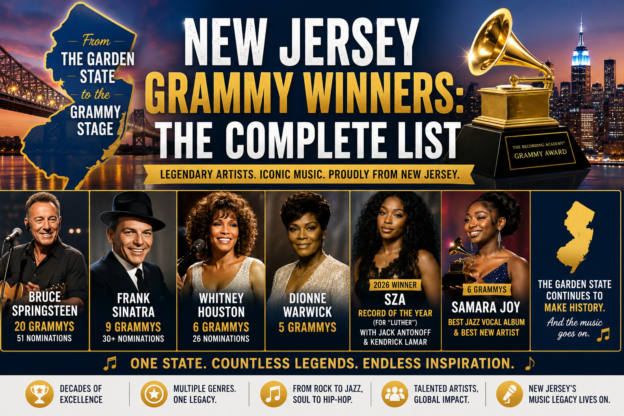
New Jersey Grammy Winners: The Complete List of Garden State Artists Who Won

New Jersey artists have won Grammy Awards, and the list is impressive! From legendary icons like Bruce Springsteen and Frank Sinatra to modern superstars like SZA and Samara Joy, the Garden State has produced some of the most Grammy-winning musicians in history. If you’ve ever wondered whether New Jersey has contributed Grammy champions to the music world, you’re in for a delightful surprise. The answer isn’t just “yes”—it’s “yes, and wow!”

Let’s dive into the exciting story of New Jersey’s Grammy-winning artists, celebrate their achievements, and explore how the state continues to shape music history.


Bruce Springsteen and the Legendary Grammy Winners from New Jersey

When it comes to New Jersey Grammy winners, one name towers above almost everyone: Bruce Springsteen. Born in New Brunswick, New Jersey, Springsteen has won 20 Grammy Awards throughout his incredible career. That’s not just impressive—it’s monumental. He’s also been nominated 51 times, which shows how consistently the music industry recognizes his artistry.

Springsteen isn’t the only legendary powerhouse from New Jersey. Here are some of the state’s most decorated Grammy winners:

ArtistGrammy WinsNotable Fact
Bruce Springsteen20From New Brunswick; 51 total nominations 
Frank Sinatra9One of the most influential singers of all time 
Whitney Houston6From Newark; 26 total nominations 
Dionne Warwick5Iconic soul singer with massive influence 
Bon Jovi1Rock band that defined the 1980s 
Queen Latifah1Multi-talented artist in music and film 
Kool & the Gang1Funk and R&B pioneers 

These artists represent decades of musical excellence, spanning rock, soul, jazz, pop, funk, and even hip-hop. New Jersey’s musical DNA is incredibly rich, and the Grammys have consistently recognized that talent.

Whitney Houston, born in Newark, won six Grammys out of 26 nominations. Her voice transformed pop and R&B music, and her legacy continues to inspire singers today. Frank Sinatra, one of the most celebrated vocalists in history, earned nine Grammys and over 30 nominations. Dionne Warwick’s five Grammys reflect her status as a soul music icon whose influence stretches across generations.

Even rock band Bon Jovi, which rose to fame in the 1980s, secured a Grammy win. Queen Latifah and Kool & the Gang each added to New Jersey’s Grammy tally with their own unique contributions to music.


Modern Grammy Winners: SZA, Samara Joy, and the New Generation

New Jersey’s Grammy success isn’t just history—it’s happening right now! The 2026 Grammy Awards showcased the state’s continued dominance in music with exciting new winners.

SZA, a native of New Jersey, took home the Record of the Year Grammy in 2026 alongside Jack Antonoff and Kendrick Lamar for their collaboration on the track “Luther”. SZA contributed as a featured vocalist on the song, which is part of Lamar’s critically praised 2024 album “GNX”. This win adds New Jersey to the list of states producing today’s most influential pop and R&B artists.

Jack Antonoff, also a New Jersey native, co-produced and co-wrote the award-winning song. His work highlights how New Jersey artists are shaping the sound of modern music behind the scenes as well as in front of the spotlight.

The 2026 Grammys also celebrated other New Jersey winners:

  • Christian McBride, a jazz bassist from Mont, won awards for Best Jazz and Best Jazz Ensemble
  • Robert Randolph, an Irvington native, won Best Contemporary Blues Album

Then there’s Samara Joy, a 26-year-old jazz vocalist whose rise has been nothing short of meteoric. She has won six Grammys out of seven nominations, including Best Jazz Vocal Album this year. Samara Joy won her first two Grammys for her album Linger Awhile—one for Best Jazz Vocal Album and another for Best New Artist, one of the most prestigious honors in music.

Samara Joy’s success proves that New Jersey continues to produce world-class talent across multiple genres. Her jazz dominance complements SZA’s pop/R&B success, showing the state’s incredible musical versatility.

Other notable contemporary Grammy winners from New Jersey include:

  • Miri Ben-Ari, a hip-hop violinist who is a Grammy Award-winning artist
  • Tye Tribbett, who received a 2026 nomination for Best Gospel Album

The new generation of New Jersey artists is not just winning Grammys—they’re redefining what music can be. From jazz to gospel to pop to blues, New Jersey musicians are leading the conversation.


Why New Jersey Produces So Many Grammy-Winning Artists

You might be wondering: what makes New Jersey such a powerhouse for Grammy-winning musicians? There are several key factors that contribute to the state’s incredible musical output.

Rich Musical Heritage and Diverse Culture

New Jersey’s location between New York City and Philadelphia gives it access to two of the most influential music markets in the United States. This geographic advantage allows artists to grow locally while staying connected to major industry hubs. The state’s diverse population—from urban cities like Newark and Camden to suburban communities—creates a melting pot of musical styles.

Soul, rock, jazz, hip-hop, funk, and blues all have deep roots in New Jersey. Artists like Whitney Houston (soul), Bruce Springsteen (rock), Samara Joy (jazz), SZA (R&B/pop), and Robert Randolph (blues) represent this incredible diversity.

Strong Music Education and Community Support

New Jersey has a robust network of music schools, community programs, and performance venues. The New Jersey School Boards Association even hosts Grammy Award-winning artists as keynote speakers at their workshops, showing how the state invests in musical education and inspiration.

Programs like “State of the Arts” feature Grammy winners and help nurture young musicians. This community support creates an environment where talent can flourish from childhood through professional careers.

Legacy of Iconic Artists Inspiring New Generations

When you grow up in a place where Bruce Springsteen, Frank Sinatra, and Whitney Houston are local legends, music feels accessible. These iconic New Jersey artists set a high standard and inspire younger musicians to pursue their craft seriously.

Samara Joy’s meteoric rise reflects this legacy. SZA’s 2026 Grammy win continues the story. The cycle of inspiration keeps New Jersey’s music scene vibrant and competitive.

Versatility Across Genres

New Jersey artists don’t specialize in just one genre—they dominate multiple. The state’s Grammy winners span:

  • Rock: Bruce Springsteen, Bon Jovi
  • Soul/R&B: Whitney Houston, Dionne Warwick, SZA
  • Jazz: Frank Sinatra, Samara Joy, Christian McBride
  • Blues: Robert Randolph
  • Funk: Kool & the Gang
  • Hip-Hop: Queen Latifah, Miri Ben-Ari

This versatility makes New Jersey’s musical contribution uniquely powerful. The state isn’t just good at one type of music—it’s exceptional at nearly all of them.


The Complete List: Every New Jersey Artist Who Has Won a Grammy

To give you the full picture, here’s a comprehensive breakdown of New Jersey Grammy winners and their award counts:

Top Tier (5+ Grammys):

  • Bruce Springsteen: 20 Grammys
  • Frank Sinatra: 9 Grammys
  • Whitney Houston: 6 Grammys
  • Dionne Warwick: 5 Grammys
  • Samara Joy: 6 Grammys

One-Grammy Winners:

  • Bon Jovi: 1 Grammy
  • Queen Latifah: 1 Grammy
  • Kool & the Gang: 1 Grammy
  • SZA: 2026 Record of the Year (shared)
  • Jack Antonoff: 2026 Record of the Year (shared)
  • Christian McBride: Best Jazz + Best Jazz Ensemble
  • Robert Randolph: Best Contemporary Blues Album
  • Miri Ben-Ari: Grammy Award-winning hip-hop violinist

New Jersey stars have also earned countless nominations. Bruce Springsteen has 51 nominations, Whitney Houston has 26, and Frank Sinatra had over 30. These numbers show that New Jersey artists aren’t just winning occasionally—they’re consistently recognized at the highest level.


New Jersey’s Grammy Legacy Continues to Grow

The story of New Jersey artists winning Grammy Awards is still being written. With SZA’s 2026 win, Samara Joy’s six Grammys, and rising talents like Tye Tribbett getting nominated, the Garden State’s musical dominance is clear.

If you’re a music fan, a New Jersey resident, or just curious about Grammy history, the answer is unmistakable: Yes, New Jersey artists have won Grammy Awards—and they’ve won them in extraordinary numbers. From Bruce Springsteen’s 20 wins to SZA’s modern pop success, from Whitney Houston’s soul legacy to Samara Joy’s jazz revolution, New Jersey has produced some of the most celebrated musicians in history.

The next time someone asks whether New Jersey has Grammy winners, you can confidently say yes—and share the incredible story of Bruce, Frank, Whitney, SZA, Samara Joy, and all the other Garden State legends who’ve taken home the golden gramophone. New Jersey’s music legacy isn’t just real; it’s legendary.

Music and tourism in New Jersey

The Rhythm of the Garden State: How Music and Tourism Go Hand-in-Hand in New Jersey

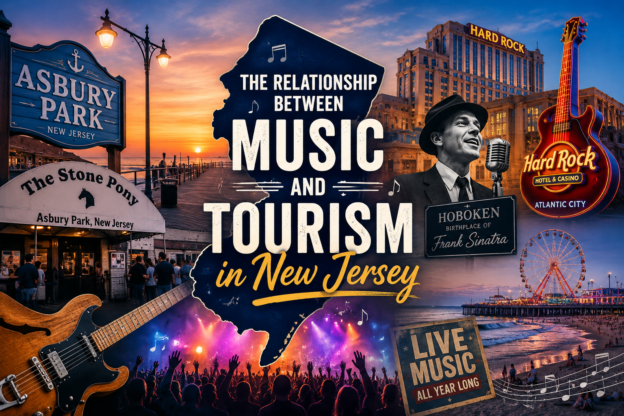
When you think of New Jersey, you might picture the Jersey Shore, bustling New York City suburbs, or famous highways. But there’s another side to the Garden State that draws visitors from all over the world: its incredible music scene. The relationship between music and tourism in New Jersey is strong, vibrant, and deeply woven into the state’s identity. People don’t just visit New Jersey for its beaches or proximity to major cities—they come for the concerts, music festivals, historic venues, and the legendary artists who call it home.

Music isn’t just entertainment in New Jersey; it’s a major economic driver and a key reason why tourists choose this state for their next vacation. From Bruce Springsteen’s Jersey Shore sound to the birthplace of hip-hop influences, from intimate jazz clubs to massive outdoor festivals, New Jersey offers a musical experience that keeps visitors coming back year after year.

Let’s dive into exactly how music and tourism connect in New Jersey, why this relationship matters, and what makes the Garden State such a special destination for music lovers.


Music Festivals and Events Draw Thousands of Visitors Every Year

One of the most obvious ways music boosts tourism in New Jersey is through festivals and live events. These gatherings attract music fans from across the country—and sometimes the world—who travel specifically to experience these celebrations of sound and culture.

New Jersey hosts numerous music festivals throughout the year, covering every genre imaginable. Whether you’re into rock, jazz, classical, hip-hop, or electronic music, there’s a festival waiting for you. These events don’t just fill concert halls; they fill hotels, restaurants, and local businesses.

The distortions of a summer music festival in New Jersey can be felt across the entire local economy. When thousands of people descend on a town for a weekend of music, they need places to sleep, food to eat, and transportation to get around. Local shops sell merchandise, nearby attractions see increased foot traffic, and the state’s tourism board often promotes these events as must-visit experiences.

Some of the most notable music festivals in New Jersey include:

  • The Newport Folk Festival influences and summer concert series that bring classic and contemporary folk artists to NJ venues
  • Jazz festivals celebrating the state’s rich jazz heritage, particularly in cities with strong African American cultural histories
  • Rock and pop festivals featuring both legendary acts and up-and-coming artists
  • Classical music events at prestigious venues like the New Jersey Performing Arts Center in Newark
  • Local borough and town festivals that showcase regional talent and draw neighboring communities

These festivals create a ripple effect. A visitor might come primarily for the music but end up exploring nearby attractions, trying local cuisine, and discovering the unique character of New Jersey towns they’d never otherwise visit. Many tourists report that attending a music festival was their “gateway” to discovering New Jersey as a travel destination.

The timing of these events also matters. Summer festival season aligns perfectly with vacation time for families and the peak tourism season at the Jersey Shore. This overlap creates a powerful combination: visitors can enjoy beach days by morning and concert nights by evening, making New Jersey an even more attractive vacation spot.

Local governments and tourism boards recognize this power. They actively promote music festivals in their marketing campaigns, partner with event organizers, and sometimes provide funding or logistical support to ensure these events succeed. It’s a win-win: festivals get the resources they need to thrive, and communities benefit from the economic boost and positive exposure.


Legendary Artists and Music History Make New Jersey a Pilgrimage Destination

New Jersey isn’t just hosting music events; it’s home to some of the most iconic musicians in American history. This connection between legendary artists and the state creates a unique form of tourism known as “music heritage tourism,” where fans travel to connect with the places, venues, and stories associated with their favorite performers. For aspiring musicians, these experiences can also serve as inspiration to develop their own skills through guitar playing tips, music workshops, and professional guitar lessons. Many visitors seek out local music schools and instructors while exploring New Jersey’s rich musical heritage, taking advantage of opportunities to learn techniques such as chord transitions, strumming patterns, fingerstyle playing, and improvisation. By combining music tourism with hands-on guitar education, fans can deepen their appreciation for the artists who shaped the industry while advancing their own musical journey.

Bruce Springsteen is arguably the most famous example. Known as “The Boss,” Springsteen was born and raised in Freehold, New Jersey, and his music is deeply rooted in Jersey working-class culture. Fans from around the world visit Freehold to see his childhood home, visit local landmarks mentioned in his songs, and experience the kind of places that inspired albums like “Born to Run” and “Darkness on the Edge of Town.” The Springsteen effect on Freehold’s tourism is measurable and significant—local businesses proudly display Springsteen memorabilia, and tours of the town highlight music-related landmarks.

But Springsteen isn’t alone. New Jersey has produced or been home to countless influential musicians across genres:

  • Whitney Houston, born in Newark, one of the best-selling music artists of all time
  • Bobby Darin, from the Bronx but raised in New Jersey, known for “Mack the Knife” and “Beyond the Sea”
  • Jon Bon Jovi, born in Perth Amboy, whose rock anthems put New Jersey on the global music map
  • Southside Johnny, a Jersey Shore staple whose music embodies the state’s coastal culture
  • Laura Nyro, from New Rochelle but deeply connected to the New York-New Jersey music scene
  • Countless hip-hop artists who emerged from Newark, Camden, and other urban centers

These artists’ connections to New Jersey create what tourism experts call “pull factors”—reasons for people to choose this destination over others. A Bruce Springsteen fan might choose to visit New Jersey instead of another state specifically because of that connection. A Whitney Houston admirer might travel to Newark to honor her legacy.

Music museums and exhibits also play a role. While New Jersey doesn’t have a single “music museum” on the scale of the Rock and Roll Hall of Fame in Cleveland, there are numerous exhibits, historical markers, and local museums that celebrate the state’s musical contributions. The New Jersey State Museum and various local historical societies regularly feature exhibits on music history.

Venues with historical significance also attract visitors. The Count Basie Theatre in Red Bank, named after the legendary jazz musician who lived in New Jersey, hosts performances and serves as a cultural landmark. The Paramount Theatre in Asbury Park—closely tied to Springsteen and the Jersey Shore sound—draws tourists who want to experience the same stage where their favorite artists performed.

This music heritage tourism isn’t just about nostalgia. It’s about authentic experiences. Visitors want to walk the same streets their favorite artists walked, visit the same diners they ate at, and feel the same coastal breeze that inspired their songs. New Jersey offers that authenticity in abundance.

The state’s proximity to New York City also amplifies this effect. Many musicians who perform in NYC live in New Jersey, and some choose NJ venues for more intimate shows. This creates a unique dynamic where music fans can catch major artists in smaller, more personal settings right in New Jersey.


Music Venues and Cultural Districts Create Tourism Hubs Across the State

Beyond festivals and famous artists, New Jersey’s music venues themselves are tourist destinations. These spaces aren’t just places to hear music; they’re cultural hubs that define neighborhoods, drive local economies, and give visitors a reason to explore specific towns and cities.

Newark provides a prime example. The New Jersey Performing Arts Center (NJPAC) is one of the largest performing arts centers in the United States outside of New York City. Since opening in 1997, it has transformed downtown Newark into a cultural destination. People travel from across the region specifically to attend concerts, ballets, operas, and other performances at NJPAC. The venue hosts everything from international classical musicians to popular hip-hop artists, making it appealing to diverse audiences.

The impact goes beyond the venue itself. When people come to NJPAC, they also visit nearby restaurants, bars, and hotels. They explore Newark’s other attractions, including the Newark Museum of Art and Branch Brook Park (famous for its cherry blossoms). NJPAC has been instrumental in Newark’s downtown revitalization, proving that music venues can be catalysts for broader economic development.

Asbury Park offers another compelling story. Once a struggling shore town, Asbury Park has reinvented itself as a music and arts destination, largely thanks to its connection to Bruce Springsteen and the Jersey Shore sound. The Stone Pony, a legendary club opened in 1974, is where Springsteen and countless other artists got their start. Today, it remains one of the most famous music venues on the East Coast, drawing fans who want to experience where music history was made.

The Stone Pony isn’t just a tourist attraction; it’s a working venue that hosts both emerging and established artists. Visitors come to see namaed acts but also to discover new talent in the same space where legends began. This creates a dynamic, living music scene rather than a static museum experience.

Asbury Park’s music scene has sparked a broader revitalization. The boardwalk has been restored, new restaurants and shops have opened, and the town now hosts the Asbury Park Music & Film Festival annually. The music identity has become the town’s brand, attracting tourists who want to experience authentic Jersey Shore culture.

Red Bank is another example. This Monmouth County borough has developed a vibrant downtown arts district centered around venues like the Count Basie Theatre and Tucker Station. The town actively promotes its music and arts scene, creating a destination that draws visitors from throughout New Jersey and beyond.

Princeton and other college towns also contribute to the music-tourism relationship. Universities host concerts, bring in touring acts, and create environments where music thrives. Visitors often combine cultural events with other Princeton attractions, creating multi-faceted trips.

The Jersey Shore towns, beyond Asbury Park, also leverage music to attract tourists. Beach towns host summer concert series, outdoor festivals, and live music at bars and restaurants. This creates a “beach plus music” vacation model that’s more appealing than beaches alone.

These venues and cultural districts create what urban planners call “destination clusters”—areas where multiple attractions, amenities, and experiences work together to draw and retain visitors. A music venue might be the primary draw, but once visitors arrive, they discover restaurants, shops, parks, and other attractions that extend their stay and increase their spending.

Local governments understand this dynamic. They invest in venue infrastructure, support arts programming, and market music districts as tourist destinations. They recognize that music isn’t just entertainment; it’s economic development.


The Economic and Cultural Impact of Music on New Jersey Tourism

The relationship between music and tourism in New Jersey isn’t just cultural—it’s economic. Music-driven tourism generates significant revenue for the state, supports jobs, and helps sustain local businesses throughout the year.

When music tourists visit New Jersey, they spend money on:

  • Accommodations: Hotels, motels, bed-and-breakfasts, and vacation rentals
  • Food and beverage: Restaurants, bars, cafes, and food trucks
  • Transportation: Gas, parking, rideshares, and public transit
  • Merchandise: Concert T-shirts, vinyl records, local crafts, and souvenirs
  • Other attractions: Museums, beaches, parks, and shopping

Studies of music tourism show that concert-goers typically spend significantly more than average tourists. A fan traveling specifically for a concert or festival will often stay multiple nights, dine out regularly, and visit local attractions in addition to the event itself. This “multiplier effect” means that every dollar spent on a ticket generates additional economic activity throughout the community.

New Jersey’s music tourism also supports jobs. Venue staff, sound engineers, security personnel, hotel workers, restaurant employees, and transportation providers all benefit from music-driven visitor traffic. The arts and culture sector, which includes music, employs thousands of New Jersey residents.

Beyond direct economic impact, music tourism enhances New Jersey’s brand as a destination. A state known for great music is more attractive than a state known only for beaches or proximity to NYC. Music gives New Jersey a unique identity and story to tell potential visitors.

This branding effect is particularly important for smaller towns and rural areas. A small borough might not have famous beaches or major attractions, but if it hosts a well-promoted music festival or has a historic venue, it can draw visitors who wouldn’t otherwise consider it. Music levels the playing field, allowing smaller communities to compete for tourism dollars.

Music also creates emotional connections with places. When someone has a memorable concert experience in New Jersey, they’re more likely to return. They might bring friends, recommend the destination to family, or post about it on social media, creating free marketing for the state. These emotional connections are more powerful than any advertisement.

The cultural impact is equally important. Music tourism brings diverse people together—people from different backgrounds, ages, and regions who share a love of music. This cultural exchange enriches communities, fosters understanding, and creates lasting memories. Music festivals and concerts become shared experiences that define people’s relationships with New Jersey.


Why Music Makes New Jersey a Unique Tourism Destination

What sets New Jersey apart from other music tourism destinations is the combination of factors it offers:

  • Accessibility: New Jersey’s location between New York City and Philadelphia makes it easy for music fans to reach. Many visitors combine a New Jersey music experience with visits to these neighboring cities, creating multi-destination trips.
  • Variety: From intimate jazz clubs to massive outdoor festivals, from classical concert halls to punk rock clubs, New Jersey offers music experiences across all genres and price points. This variety appeals to diverse audiences.
  • Authenticity: New Jersey’s music scene isn’t manufactured for tourists. It’s a living, breathing part of the state’s culture. Visitors experience real music in real venues with real artists, not tourist traps designed for visitors.
  • History: New Jersey’s connection to legendary artists and music movements gives it depth and authenticity that newer music destinations can’t match. Fans can connect with music history by visiting actual places where history happened.
  • Seasonal diversity: While summer festival season is peak, music events happen year-round. Winter concerts, indoor venues, and off-season festivals ensure music tourism isn’t limited to warm months.
  • Coastal plus music: The unique combination of Jersey Shore beaches with music venues creates a vacation model that’s hard to replicate elsewhere. Beach days and concert nights in the same trip is a powerful draw.

For travelers planning a trip, New Jersey offers something special: the chance to experience world-class music in an authentic, accessible, and diverse setting. Whether you’re a lifelong Bruce Springsteen fan, a jazz enthusiast, a festival-goer, or just someone who loves live music, New Jersey has a place for you.

The relationship between music and tourism in New Jersey is symbiotic. Music brings visitors to the state, and those visitors support musicians, venues, and the broader music ecosystem. This cycle creates a thriving music scene that continues to attract more visitors, more artists, and more investment.

As New Jersey continues to develop its tourism infrastructure and promote its music heritage, this relationship will only strengthen. New music venues will open, new festivals will launch, and new artists will emerge from the Garden State. And music lovers will continue to discover why New Jersey is one of the best destinations for musical experiences in the Northeast.

So the next time you’re planning a trip and love music, consider New Jersey. You might come for a concert but stay for the beaches, the food, the history, and the unforgettable experience of experiencing music in the place where it’s authentically alive. The rhythm of the Garden State is waiting for you.

7 Musical Genres Associated with New Jersey

New Jersey, often overshadowed by its cultural powerhouse neighbors, boasts a rich musical landscape that encompasses a diverse array of genres. From the iconic sounds of the Jersey Shore to the rhythms of Newark’s jazz heritage, the Garden State is home to an eclectic range of musical styles. In this article, we will explore the specific musical genres associated with New Jersey, delving into the unique sounds and legacies that have left an indelible mark on the state’s cultural identity.

The Jersey Shore Sound
One of the most iconic and regionally distinctive musical genres associated with New Jersey is the “Jersey Shore Sound.” Emerging from the vibrant clubs of Asbury Park and the surrounding coastal communities, this genre is a fusion of rock, rhythm and blues, and soul. Artists like Bruce Springsteen, Southside Johnny, and Bon Jovi epitomize the Jersey Shore Sound, crafting anthems that celebrate blue-collar sensibilities and tales of everyday life. Springsteen’s poetic storytelling, in particular, captures the essence of this genre, resonating with audiences worldwide.

Jazz and Newark’s Legacy
New Jersey has made significant contributions to the jazz genre, with Newark, in particular, holding a special place in the history of American jazz. The city was home to influential jazz musicians like Sarah Vaughan and Wayne Shorter. Vaughan’s sultry vocals and Shorter’s groundbreaking saxophone work have left an indelible mark on the jazz world. Newark’s vibrant jazz scene during the mid-20th century was a crucible of innovation and talent, contributing to the genre’s evolution.

Latin Music
New Jersey’s multicultural communities have fostered a thriving Latin music scene. Cities like Newark and Union City are home to a rich tapestry of Latin cultures, including Puerto Rican, Cuban, and Dominican. This diversity is reflected in the state’s Latin music, which encompasses a variety of styles, such as salsa, merengue, bachata, and reggaeton. New Jersey’s Latin artists and bands contribute to the global popularity of these genres, infusing their music with a blend of traditional and contemporary influences.

Hip-Hop
New Jersey’s hip-hop scene has grown and flourished over the years. It has been a hub for pioneering hip-hop artists like Queen Latifah and Naughty by Nature. Queen Latifah, a prominent figure in both music and acting, was one of the genre’s early female trailblazers, breaking barriers with her lyrics and empowering messages. Naughty by Nature, known for their hit “O.P.P.,” played a significant role in the rise of hip-hop on the East Coast. The state continues to produce a new generation of hip-hop artists who contribute to the genre’s ever-evolving landscape.

Rock and Indie Rock
New Jersey has had a lasting influence on the rock genre, from the legendary Bruce Springsteen to modern indie rock acts. Springsteen’s poetic lyrics and anthemic rock sound have made him a global rock icon, often associated with the heartland and working-class struggles. Furthermore, New Jersey has nurtured indie rock bands like Yo La Tengo, whose experimental and genre-blurring music has gained international acclaim. The state’s indie rock scene is characterized by its artistic innovation and willingness to push the boundaries of traditional rock music.

Electronic and Dance Music
The electronic and dance music scene in New Jersey has experienced significant growth, particularly in cities like Newark and Atlantic City. The state hosts electronic dance music (EDM) festivals, attracting renowned DJs and electronic artists. The genre encompasses a broad spectrum of electronic music styles, from house and techno to dubstep and trance. These events and local clubs have transformed New Jersey into a lively hub for electronic music enthusiasts.

Folk and Acoustic Music
Folk and acoustic music find a home in New Jersey’s cultural landscape. Local artists and singer-songwriters often gravitate towards folk and acoustic styles, sharing stories of life in the Garden State. These musicians perform in cozy coffee shops, intimate venues, and local festivals, adding to the diverse range of musical genres celebrated in New Jersey.

New Jersey’s musical identity is a testament to its cultural diversity and historical significance. The state’s association with specific musical genres, from the iconic Jersey Shore Sound to jazz and Latin music, reflects the tapestry of communities and traditions that make up its cultural fabric. New Jersey’s musical landscape continues to evolve, with emerging artists and innovative styles contributing to the ever-expanding legacy of the Garden State’s musical heritage.

What role does music play in New Jersey’s culture?

New Jersey, often overshadowed by its neighboring cultural giants, possesses a rich and vibrant musical tapestry that intertwines with its cultural identity. Music in the Garden State transcends mere entertainment; it serves as a conduit for storytelling, community cohesion, and the preservation of diverse traditions. In this article, we will explore the multifaceted role of music in New Jersey’s culture, delving into how it shapes the state’s identity, fosters a sense of belonging, and reflects the cultural diversity that defines this dynamic region.

A Reflection of Cultural Diversity
Music in New Jersey mirrors the state’s remarkable cultural diversity. As a melting pot of cultures and communities, New Jersey’s musical landscape encompasses a wide spectrum of genres, from jazz and classical to hip-hop and Latin music. The state’s multicultural heritage is celebrated through music, with artists from various backgrounds contributing to a rich and harmonious sonic mosaic.

Celebrating Ethnic Traditions
Music plays a pivotal role in celebrating and preserving the ethnic traditions of New Jersey’s diverse communities. Whether it’s the vibrant sounds of Indian classical music in Edison, the soul-stirring rhythms of African drumming in Newark, or the lively melodies of Italian folk music in Paterson, the state’s music scene serves as a living testament to the rich tapestry of ethnic cultures that call New Jersey home.

Musical Storytelling
New Jersey’s music serves as a powerful medium for storytelling. Artists like Bruce Springsteen and Jon Bon Jovi have used their music to narrate tales of everyday life in the state, capturing the struggles, dreams, and triumphs of its residents. These musical narratives resonate with listeners, creating a sense of shared experiences and a deep connection to the state’s cultural heritage.

Fostering a Sense of Community
Music fosters a sense of community in New Jersey, bringing people together through shared experiences. Local music scenes thrive in cities like Asbury Park and Hoboken, where venues like The Stone Pony and Maxwell’s have become hubs for live performances. These venues provide spaces for residents to gather, connect, and support local talent, strengthening the sense of belonging within their communities. In the same spirit of local connection, neighborhoods across the state continue to support small businesses and essential trades — from family-owned cafes to local garage door experts who help keep homes safe and functional year-round.

Music as a Cultural Bridge
Music serves as a cultural bridge, connecting generations and preserving traditions. Many New Jersey families pass down musical traditions through the generations, whether it’s teaching children to play traditional instruments or sharing songs from their ancestral homelands. This intergenerational transmission of music keeps cultural heritage alive and creates a bridge between the past and the present.

Education and Musical Heritage Preservation
Music education programs in New Jersey schools play a crucial role in preserving the state’s musical heritage. Students are exposed to a wide range of musical genres and traditions, helping them develop an appreciation for the diversity of cultures within the state. Music education also serves as a platform for young artists to explore their talents and carry forward the state’s rich musical legacy.

Community Celebrations and Festivals
New Jersey’s culture is alive with community celebrations and festivals, many of which feature music as a central element. Events like the Montclair Jazz Festival and the Portuguese Folk Festival in Newark showcase the cultural vibrancy of the state through music and dance. These festivals not only celebrate specific traditions but also provide opportunities for residents to come together and learn about the cultural heritage of their neighbors.

Music in New Jersey is far more than just melodies and harmonies; it is the heartbeat of a culturally diverse state. It reflects the richness of ethnic traditions, serves as a storyteller of everyday life, fosters community cohesion, and acts as a bridge between generations. Through music, New Jersey’s residents celebrate their heritage, share their stories, and create a sense of belonging that unites the state’s diverse communities. As music continues to play a multifaceted role in New Jersey’s culture, it remains a testament to the resilience and vibrancy of the Garden State’s cultural identity.

How does the New Jersey music scene compare to other states?

The United States is a kaleidoscope of diverse musical landscapes, with each state contributing its unique rhythm and flavor to the nation’s musical tapestry. New Jersey, often overshadowed by its neighboring cultural giants, boasts a vibrant and distinct music scene. In this article, we will embark on a journey to compare the New Jersey music scene with those of other states, shedding light on the Garden State’s musical heritage, its contributions, and how it stands out in the larger American musical panorama.

A Palette of Genres
New Jersey’s music scene stands out for its diverse range of musical genres. The state has been a cradle for artists spanning a wide spectrum, from the iconic crooner Frank Sinatra to rock legend Bruce Springsteen and hip-hop pioneers like Queen Latifah. This musical diversity is a testament to the state’s rich cultural heritage and the openness of its music community to embrace various styles.

Comparatively, states like Tennessee (Nashville) and Texas (Austin) have built their reputations around specific genres—country and blues in the former and country and indie rock in the latter. While these states excel in their respective genres, they may not match New Jersey’s versatility.

A Legacy of Innovation
New Jersey has a storied history of musical innovation. The state was home to Thomas Edison, whose invention of the phonograph revolutionized the music industry. Bell Labs in New Jersey played a crucial role in developing audio technology, including the creation of the first transistor, which paved the way for modern electronic music.

In contrast, states like California have made significant contributions to music through technological innovation (Silicon Valley) and music production (Hollywood). However, New Jersey’s role in audio technology innovations is a unique aspect of its music scene.

The Jersey Shore Sound
New Jersey’s “Jersey Shore Sound” is a distinct subculture within its music scene. Characterized by a fusion of rock, rhythm and blues, and soul, this genre’s most famous proponent is Bruce Springsteen. The Jersey Shore Sound reflects working-class sensibilities and everyday life in the state, offering a unique perspective not commonly found in other states’ music scenes.

Comparatively, states like California and New York have bustling music scenes with a wide variety of genres, but they might lack the specific regional sound and cultural identity that the Jersey Shore Sound brings to New Jersey.

Proximity to Musical Hubs
New Jersey’s location, sandwiched between two major musical hubs—New York City and Philadelphia—provides unique opportunities for its musicians. Artists in the Garden State can easily access these major cities’ resources, record labels, and venues. This proximity allows for a fluid exchange of talent and ideas.

In contrast, states like Texas, known for its vibrant music scene, particularly in Austin, may not have the same access to multiple major cities in close proximity. This geographical advantage gives New Jersey musicians a distinctive edge.

Thriving Local Venues
New Jersey boasts a plethora of music venues, ranging from iconic spaces like The Stone Pony in Asbury Park to smaller clubs and bars scattered throughout the state. These venues create a thriving ecosystem for local talent to develop, perform, and connect with audiences.

Compared to states with renowned music scenes, like Tennessee with Nashville or Louisiana with New Orleans, New Jersey’s music venues provide a rich tapestry of opportunities for emerging artists. While these other states are known for their established music industries, New Jersey’s local venues contribute significantly to its musical vitality.

The New Jersey music scene, though often overshadowed by musical powerhouses like California, Tennessee, and New York, holds its own unique charm and influence in the American musical landscape. Its diversity of genres, legacy of innovation, distinctive regional sound, proximity to major hubs, and thriving local venues make it a dynamic and resilient player in the world of music. While it may not have the same level of global recognition as some other states, the Garden State’s music scene continues to flourish, enriching the musical heritage of both the state and the nation.

Has the pandemic impacted the music industry in New Jersey

Has the pandemic impacted the music industry in New Jersey?

The COVID-19 pandemic brought unprecedented challenges to all facets of society, including the world of music. New Jersey, with its vibrant musical landscape and rich cultural heritage, was not exempt from the pandemic’s impact on the music industry. In this article, we will delve into the multifaceted ways in which the pandemic has transformed New Jersey’s music scene, from canceled concerts and shifting business models to creative adaptations and community support, shedding light on both the challenges and the resilience of those within the state’s music industry.

Silent Stages: Canceled Concerts and Events

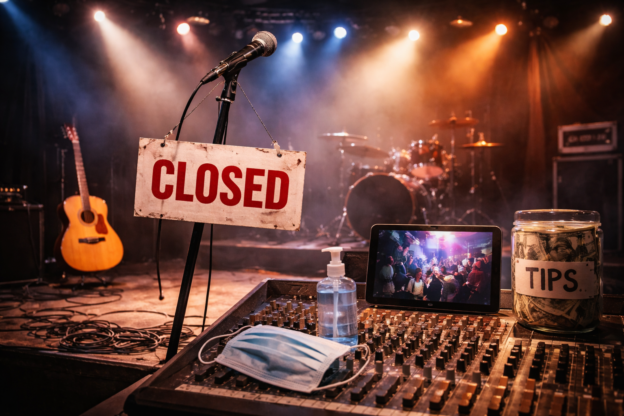
One of the most immediate and visible impacts of the pandemic on New Jersey’s music industry was the cancellation of live concerts and events. From small local gigs to large-scale music festivals, venues fell silent as public health measures prohibited gatherings.

This abrupt disruption affected artists, promoters, venue owners, and the countless professionals working behind the scenes. Many local businesses that typically support venues and events from equipment suppliers to providers of professional commercial locksmith services also felt the ripple effects as concerts and gatherings came to a halt.

The financial toll was significant, as revenue streams from ticket sales, merchandise, and concessions dwindled to a standstill.

Shifting Business Models: Virtual Performances

Adversity spurred innovation as musicians and venues adapted to the “new normal” by embracing virtual platforms. Live streaming performances and online concerts became the lifeline for artists seeking to connect with their audiences and generate income. Venues experimented with virtual tours and streaming events, allowing fans to enjoy live music from the safety of their homes. This shift in business models not only helped to sustain artists but also broadened the reach of New Jersey’s music scene beyond its geographical boundaries.

Creative Collaborations and Adaptations

The pandemic prompted collaborations and creative adaptations within New Jersey’s music industry. Musicians explored remote collaborations, producing tracks with fellow artists despite physical distancing. Studios shifted to remote recording sessions, allowing artists to continue creating music while adhering to safety protocols. Drive-in concerts, where audiences enjoyed performances from the safety of their vehicles, emerged as a novel way to experience live music. Additionally, venues offered curbside pickups for merchandise and introduced creative ways to engage audiences, such as virtual album release parties and online workshops.

Community Support: Banding Together

The challenges brought about by the pandemic led to a sense of solidarity within New Jersey’s music community. Benefit concerts, fundraisers, and crowdfunding campaigns emerged to support struggling artists, venue staff, and industry professionals. Musicians and fans alike recognized the importance of sustaining the local music ecosystem and rallied to provide financial assistance and emotional support. Organizations, like the New Jersey Pandemic Relief Fund, were established to offer aid to those impacted by the crisis, showcasing the resilience and compassion of the state’s music community.

Reimagining the Future: Long-Term Implications

The pandemic’s impact on New Jersey’s music industry has prompted a reassessment of long-term strategies. Musicians and industry professionals are reevaluating the reliance on traditional revenue streams and exploring innovative ways to monetize their work in a digital landscape. Venues are considering how to provide safe and engaging experiences for audiences as they navigate post-pandemic operations. Additionally, the shift to virtual performances has highlighted the importance of strong online presence and engagement, leading to a broader emphasis on social media and digital marketing strategies.

The COVID-19 pandemic disrupted New Jersey’s music industry in profound ways, shaking the foundations of live performances, challenging traditional business models, and igniting a wave of creativity and adaptation. Through canceled concerts, virtual performances, creative collaborations, community support, and a reimagining of the future, New Jersey’s music community displayed remarkable resilience. As the industry continues to navigate these challenges, the lessons learned during this unprecedented time will undoubtedly shape its trajectory, guiding artists, venues, and music enthusiasts toward a transformed and revitalized musical landscape.

What impact has New Jersey had on popular music?

Nestled between towering cities and serene coastlines, New Jersey has long been a melting pot of cultural diversity and creative innovation. This vibrant state has wielded a profound impact on popular music, shaping genres, launching careers, and fostering an environment of musical experimentation. In this article, we will explore the multifaceted ways in which New Jersey has indelibly influenced popular music, from birthing iconic artists to nurturing unique sounds, and from technological breakthroughs to its role as a cultural crossroads.

A Breeding Ground for Legends

New Jersey’s influence on popular music begins with the birthplace of legendary artists who have left an indelible mark on the global soundscape. Icons like Frank Sinatra, born in Hoboken, and Bruce Springsteen, hailing from Freehold, emerged from New Jersey’s streets with their distinctive voices and narratives. Sinatra’s smooth crooning style and Springsteen’s poetic rock anthems have resonated with audiences worldwide, influencing generations of musicians and setting the standards for vocal delivery and songwriting.

Pioneering Technological Breakthroughs

New Jersey’s impact on popular music extends beyond artistic contributions; it has also played a pivotal role in technological innovation. Thomas Edison, a resident of Menlo Park, invented the phonograph, transforming the music industry by allowing sound to be captured and reproduced. Edison’s creation revolutionized how music was consumed and distributed, paving the way for the recording industry. Additionally, Bell Labs in Murray Hill made groundbreaking advancements in sound recording and transmission, laying the foundation for modern digital music formats and shaping the trajectory of music’s evolution.

The Garden State Sound

The state’s diverse musical landscape gave birth to the “Jersey Shore Sound,” a fusion of rock, rhythm and blues, and soul that emerged in the vibrant clubs of Asbury Park. Artists like Bruce Springsteen, Southside Johnny, and Bon Jovi epitomized this sound, marked by storytelling, blue-collar sensibilities, and a reflection of everyday life. The Stone Pony, an iconic venue in Asbury Park, became a hallowed ground for this movement, fostering a sense of community and camaraderie among artists and fans alike. Similar to how homeowners depend on local garage door services to keep things running reliably behind the scenes.

Fostering Innovation and Experimentation

New Jersey’s impact on popular music is intertwined with its role as a hub for innovation and experimentation. The state’s close proximity to New York City, a global cultural epicenter, has facilitated cross-pollination of ideas and musical styles. This environment has spurred collaborations and artistic growth, leading to the emergence of unique sounds and boundary-pushing genres. From the experimental rock of Talking Heads to the alternative stylings of The Misfits, New Jersey’s music scene has cultivated a spirit of exploration that has rippled throughout the industry.

A Cultural Crossroads

New Jersey’s strategic location on the eastern seaboard has made it a crossroads of cultures, languages, and musical traditions. The state’s vibrant Latin music scene, influenced by its multicultural communities, has enriched the tapestry of popular music. From salsa and merengue to reggaeton, New Jersey’s Latin artists have contributed to the global popularity of these genres. This diverse landscape has also fostered the growth of hip-hop, punk, jazz, and electronic music scenes, all of which have contributed to the state’s multifaceted impact on popular music.

Nurturing New Generations

New Jersey’s influence on popular music continues through its dedication to nurturing new generations of artists. The state boasts esteemed music schools and institutions, such as Rutgers University’s Mason Gross School of the Arts, which have produced countless talented musicians. Local music venues like The Stone Pony and The Bitter End offer emerging artists platforms to showcase their talents, fostering an environment of creativity and innovation that ensures the state’s ongoing impact on popular music.

From legends like Sinatra and Springsteen to technological pioneers like Edison, New Jersey’s impact on popular music resonates through time and space. Its unique blend of artistic excellence, technological innovation, diverse cultural influences, and fertile ground for experimentation has left an indelible mark on the global music landscape. As the state continues to produce talented musicians, nurture unique sounds, and push the boundaries of musical expression, everyday aspects of life from creative pursuits to practical needs like securing homes and businesses remain part of the broader community fabric. New Jersey’s influence on popular music remains an enduring testament to its vibrant cultural heritage and creative spirit.

How has New Jersey influenced the music industry?

Nestled between bustling metropolises and scenic shorelines, New Jersey has silently wielded a powerful influence on the music industry for decades. As the birthplace of legendary artists, the nurturing ground for diverse genres, and a hub of innovation, the state’s musical legacy stretches far beyond its borders. In this article, we’ll explore the multifaceted ways in which New Jersey has left an indelible mark on the music industry, shaping genres, nurturing talents, and leaving an unmistakable imprint on the soundscape of the world.

Birthplace of Icons
New Jersey has been a cradle for some of the most influential figures in music history. Bruce Springsteen, often dubbed “The Boss,” emerged from the heart of the state with his poetic lyrics and iconic rock sound. The state also gave rise to Frank Sinatra, whose velvety croon epitomized the golden era of American music. Whitney Houston’s soaring voice and Queen Latifah’s groundbreaking hip-hop contributions further cemented New Jersey’s status as a breeding ground for musical excellence. These artists not only attained international fame but also inspired generations of musicians and set the bar high for artistic expression.

The Jersey Shore Sound
The Jersey Shore Sound, characterized by its mix of rock, rhythm and blues, and soul influences, created a distinctive sonic identity. Bruce Springsteen, along with bands like Southside Johnny and the Asbury Jukes, epitomized this sound that resonated with blue-collar sensibilities and tales of everyday life. The legendary Stone Pony in Asbury Park became a mecca for this movement, fostering a sense of community and camaraderie that radiated far beyond its shores. This sound not only fueled the state’s music scene but also influenced artists worldwide, laying the foundation for Americana and heartland rock.

Epicenters of Innovation
From the invention of the phonograph by Thomas Edison to Bell Labs’ pioneering work in sound recording and transmission, New Jersey’s innovations have left an indelible mark on the music industry’s technological landscape. Edison’s breakthroughs revolutionized how music was recorded and played back, essentially giving birth to the recording industry. Later, Bell Labs’ contributions, including advancements in audio compression technology, paved the way for modern digital music formats. These innovations transformed how music was created, consumed, and shared, redefining the music industry’s very essence.

A Diverse Musical Tapestry
New Jersey’s influence stretches across a diverse range of musical genres. The state has been a hotbed for jazz, with cities like Newark nurturing greats like Sarah Vaughan and Wayne Shorter. Hip-hop also found its voice in New Jersey, with notable figures like Queen Latifah and Naughty by Nature breaking new ground. The state’s vibrant Latin music scene, influenced by its multicultural communities, added yet another layer of diversity to its musical tapestry. By embracing and fostering various musical genres, New Jersey has contributed to the rich mosaic of sounds that shape the global music landscape.

Thriving Music Scene
New Jersey’s music scene is characterized by its abundance of venues, studios, and music schools. Iconic venues like The Stone Pony, Maxwell’s, and The Bitter End have nurtured local talents and welcomed international stars. The state’s proximity to New York City, a cultural epicenter, has facilitated collaborations and exposure for New Jersey musicians. Additionally, institutions like Rutgers University’s Mason Gross School of the Arts have produced numerous accomplished musicians who continue to impact the industry. The combination of local support, world-class education, and vibrant venues has created a breeding ground for creativity and innovation.

From Sinatra’s timeless ballads to Springsteen’s anthemic rock, New Jersey’s influence on the music industry is as diverse as the state itself. By producing iconic artists, nurturing unique sounds, fostering innovation, embracing diversity, and providing a thriving musical ecosystem, New Jersey has undeniably left its mark on the global soundscape. The Garden State’s musical legacy continues to resonate in the rhythms that echo around the world, reminding us that greatness knows no boundaries and that even in the smallest of states, monumental harmonies can be found.